A detailed account of shared traditions, market systems, festivals, and governance structures linking Anioma to the Igbo heartland.
Across Anioma communities; from Asaba, Issele-Uku, and Onicha-Ugbo to Agbor, Umunede, Kwale, Aboh, and Obiaruku, the traditional four-day Igbo calendar of Eke, Orie, Afor, and Nkwo governs market days, festival dates, and community decision-making, just as it does in Anambra, Imo, Enugu, Abia, and Ebonyi. These market days still carry their original Igbo names (sometimes slightly varied as Olie or Afu), and they are central to communal rites such as new yam festivals, ancestral celebrations, age-grade meetings, and agricultural cycles. Kingship structures further cement this centuries-old relationship: many Anioma towns retain the Igbo royal title “Obi,” the same title used by Nri, Onitsha, Oguta, and several historic Igbo kingdoms in the East. Equally, ritual and warrior dignities like Ikenga, Ogene title holders, Ada and Ogene societies, and masquerade traditions such as Mmanwu, Ine, and Akwu Ocha processions mirror the patterns found across the five Igbo states. These shared institutions demonstrate not borrowed customs, but a common cultural root.
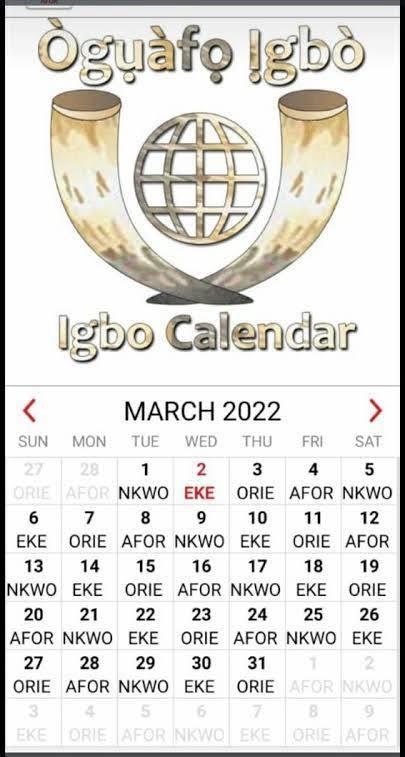
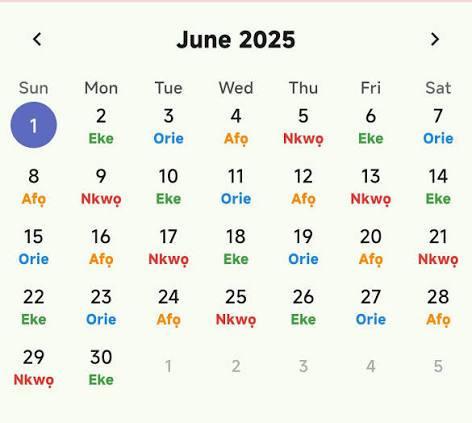
THE IGBO CALENDAR IN ANIOMA
One of the strongest cultural indicators of Anioma’s connection with the Igbos in South East is the traditional four-day Igbo market calendar: Eke, Oye/Orie, Afor, Nkwo. This four-day week determines market cycles, farming rhythms, ritual ceremonies, and community gatherings across Igbo-speaking areas—including Anioma.
Use of the Igbo Calendar Across Anioma (By Local Government Area)
- Aniocha North
Communities: Onicha-Ugbo, Issele-Uku, Idumuje-Ugboko, Idumuje-Unor, Ezi, Obior, Ukwu-Nzu.
Examples:
• Issele-Uku: Nkwo market is a major trading day; Olie is used interchangeably with Orie.
• Onicha-Ugbo: Afor is a traditional rest day for major farming activities. - Aniocha South
Communities: Ogwashi-Uku, Ubulu-Uku, Ubulu-Unor, Ubulu-Olona, Nsukwa.
Calendar: Eke → Eke, Orie/Oye → Olie, Afor → Afor/Akwa, Nkwo → Nkwo.
Examples:
• Ogwashi-Uku: Nkwo Ogwashi is historically the earliest market site.
• Ubulu-Uku: Olie market is most prominent. - Oshimili North
Communities: Akwukwu-Igbo, Atuma, Ebu, Illah.
Examples:
• Akwukwu-Igbo: Eke Akwukwu is the traditional market day.
• Illah: Aforo (Afor) is culturally significant and tied to ancestral rites. - Oshimili South
Communities: Asaba, Okwe.
Example:
• Asaba: Olie and Afor days mark cycles for age-grade meetings and shrine visitations. - Ika North East
Communities: Owa-Oyibu, Owa-Alero, Umunede, Akumazi, Owerre-Olubor.
Examples:
• Umunede: Nkwo is a central market day.
• Owa: Olie and Afor are the most active traditional cycle markers. - Ika South
Communities: Agbor, Abavo, Ewuru, Emuhu.
Example:
• Agbor: Oye market is a dominant cultural and economic hub. - Ndokwa East
Communities: Aboh, Ibrede, Ashaka, Onyah.
Example:
• Aboh Kingdom: Afor is associated with canoe departure rituals historically. - Ndokwa West
Communities: Kwale/Utagba-Uno, Ezhionum, Emu Unor, Emu Ebendo.
Example:
• Kwale: Eke market is historically tied to communal decision-making gatherings. - Ukwuani
Communities: Obiaruku, Umutu, Umuaja.
Example:
• Obiaruku: Nkwo market remains the largest convergence point for merchants from Isoko, Urhobo, and the Anioma region.
Variations in Anioma Use of the Igbo Calendar
- Pronunciation Variations: Orie → Olie/Oye (Aniocha South, Ika, Ukwuani), Afor → Afo/Afu/Akwu (Ika areas), Nkwo → Nkolo (rare; Ika subgroups)
- Functional Differences: Some communities attach unique meanings. In Ogwashi-Uku and Issele-Uku, Nkwo is spiritually powerful for cleansing or ancestral communication. In Aboh, Afor is linked to water-related rituals due to riverine heritage.
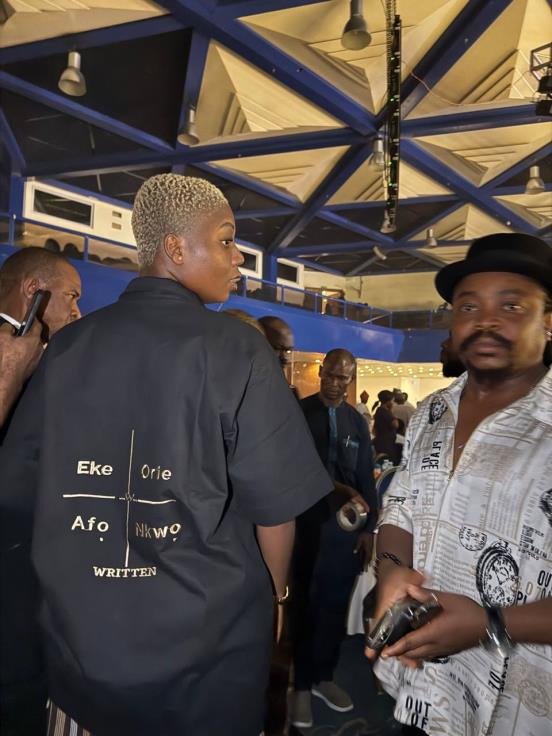
Calendar-Based Festivals Linking Anioma to Igbo Culture
- Ine Festival (Issele-Uku & Onicha-Ugbo) – dates rotate according to market days, especially Nkwo.
- New Yam Festivals across Anioma – anchored around Eke or Afor depending on the community.
- Aju Festival in Illah – tied to the four-day cycle.
- Ikenga Festival in many Aniocha towns – aligns with the Orie/Olie cycle.
The consistent use of the Igbo calendar across Anioma’s nine LGAs provides strong cultural proof of Anioma’s Igbo heritage. Despite political geography placing the region in the Niger-Delta framework, the rhythm of life—markets, festivals, chieftaincy rituals, farming seasons—follows the same Igbo pattern practiced in Anambra, Enugu, Imo, Abia, and Ebonyi.
IGBO–ANIOMA CULTURAL ALIGNMENT IN KINSHIP, CHIEFTAINCY & TITLES
(Kingship and Chieftaincy Institutions Across the Nine Anioma LGAs)
Anioma (Delta North) shares deep civilizational, linguistic, social and ritual ties with the Igbo of the South-East. The kingship, chieftaincy and title systems, are structurally and linguistically Igbo. Across the nine Anioma LGAs, traditional titles mirror those in Anambra, Enugu, Ebonyi, Imo and Abia States.
- Obi (King) – Cultural Significance: “Obi” denotes kingship, ancestral authority, and spiritual custodianship, a feature common to the broader Igbo civilization.
Where it is used in Anioma:
• Aniocha North LGA: Obomkpa, Ezi, Onicha-Olona, Idumuje-Ugboko, Idumuje-Unor
• Aniocha South LGA: Ogwashi-Uku, Ubulu-Uku, Ubulu-Unor
• Ika North East LGA: Akumazi, Umunede, Ute-Okpu
• Ika South LGA: Agbor
• Oshimili North LGA: Illah, Okpanam
• Oshimili South LGA: Asaba (the Asagba, but royal lineage still uses Obi historically)
• Ndokwa East LGA: Aboh
• Ndokwa West LGA: Utagba-Ogbe (Kwale)
• Ukwuani LGA: Some clans within Umutu, Umukwata
South-East Equivalents: Anambra: Onitsha (Obi of Onitsha), Nnewi (Obi of Otolo), Ogidi, Agulu, Ojoto; Enugu State: Nsukka region; Imo State: Mbaise and Owerri clans; Abia State: Some Old Bende and Ngwa communities; Ebonyi State: Ezza/Afikpo sub-groups (variant forms) - Ikenga / Ikenga Osisi (Personal Power & Achievement Title) – Found especially in Ika and Oshimili/Aniocha communities. South-East Equivalents: Anambra, Imo, Enugu/Ebonyi, Abia.
- Odogwu (War Leader / Defender of the Community) – Anioma Usage: Ogwashi-Uku, Issele-Uku, Onicha-Olona & Idumuje-Unor, Asaba, Okpanam, Umunede, Akumazi, Aboh, Ukwuani/Obiaruku. South-East Equivalents: Anambra, Imo, Enugu warrior clans, Abia/Ebonyi fighters.
- Ezeni / Ezeani / Eze-Titles (Priestly kingship titles) – Anioma Usage: Asaba/Okpanam, Illah, Onicha-Olona, Aboh. South-East Equivalents: Nri / Agukwu-Nri, Nsukka, Mbaise, Abia.
- Ozo / Nze-Ozo (Highest Igbo Manhood Title) – Anioma Usage: Asaba, Ogbe-Owelle and Ogbe-Ogene quarters of Asaba, Issele-Uku & Idumuje-Ugboko, Ugbodu, Ubulu-Uku, Ogwashi-Uku, Umunede & Akumazi. South-East Equivalents: Anambra, Enugu, Imo, Abia/Ebonyi.
- Agu / Agubata (Warrior / Defender) – Anioma Usage: Umunede, Ute-Okpu, Akumazi (Ika), Asaba, Okpanam (Oshimili), Ogwashi-Uku, Ubulu-Uku, Ukwuani/Ndokwa clans. South-East Equivalents: Anambra, Imo, Ebonyi.
- Okpara / Ada (First-Son / First-Daughter) – Anioma Usage: Oshimili, Aniocha, Ika, Ndokwa, and Ukwuani. South-East Equivalents: Anambra, Enugu, Imo, Abia, Ebonyi.
Anioma’s title system including the Obi, Ozo, Iyase, Omu, Odogwu, Ikenga Osisi, Ezeani, Okpara/Ada and more, is integrated with the classical Igbo culture. This shared kingship and chieftaincy heritage shows that Anioma is a distinctive Igbo group, culturally aligned with the South-East across language, rites, political structure, age-grade systems and ancestral institutions. Moreover, in everyday language, folklore, family structure, and worldview, Anioma life reflects the broader Igbo identity. Clan names, lineage systems, and kinship appellations such as Nwanne, Dede, Ada, and Ogbueshi/Ogwuashi carry the same meanings and social obligations found in Eastern Igbo society. Traditional governance also follows the Igbo model of gerontocracy, village assemblies, age-grade responsibilities, and community custodianship through titled men and women. Even religious cosmology; a belief in Chukwu, Chi, reverence for ancestors, and the sacredness of natural elements, aligns with Igbo spirituality. The result is a cultural map in which Anioma and South-Eastern Igboland share a unified heritage, one preserved through language, rituals, titles, festivals, and social conduct despite modern political boundaries. Anioma, just like other Igbo groups outside the South East, is an authentic extension of the Igbo world, expressing and maintaining the distinct cultural identity of the Igbo civilization.
Additionally, the apex Igbo socio-cultural organization, Ohanaeze Ndi-Igbo, formally recognizes seven “Igbo states” under its constitution — namely Abia State, Anambra State, Ebonyi State, Enugu State, Imo State, Anioma and Ikwerre. This formal inclusion of Anioma gives constitutional and institutional legitimacy to Anioma’s Igbo heritage, not merely as a matter of linguistic or cultural affinity, but as part of the pan-Igbo nation’s political and cultural fold. Moreover, the leadership rotation of Ohanaeze Ndigbo underscores the equal status of Anioma alongside the core South-East states. Under Article 11 of the Ohanaeze constitution, the office of President-General rotates among the seven member states in the order: Abia → Anambra → Anioma → Ebonyi → Enugu → Imo → Ikwerre. That means every few years, Anioma becomes eligible to produce the national President-General of Ohanaeze, a clear acknowledgement of its place within Igbo governance and identity structures.
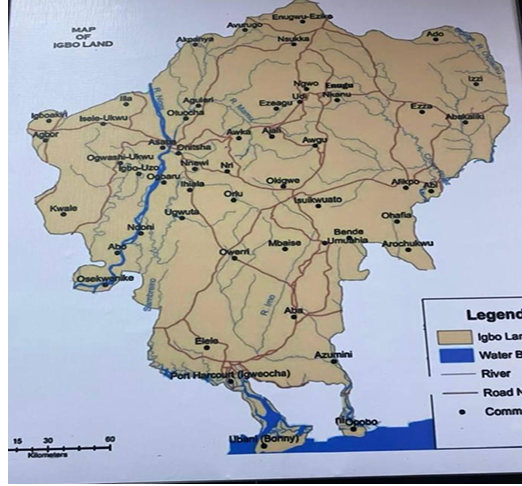
The Dream Igbo Map
This map represents the aspirational unity and identity of Igbo land as envisioned by Ohanaeze Ndi-Igbo. It features all seven Igbo states officially recognized by Ohanaeze Ndi-Igbo, symbolizing cultural cohesion, historical continuity, and the collective dream of the Igbo people.