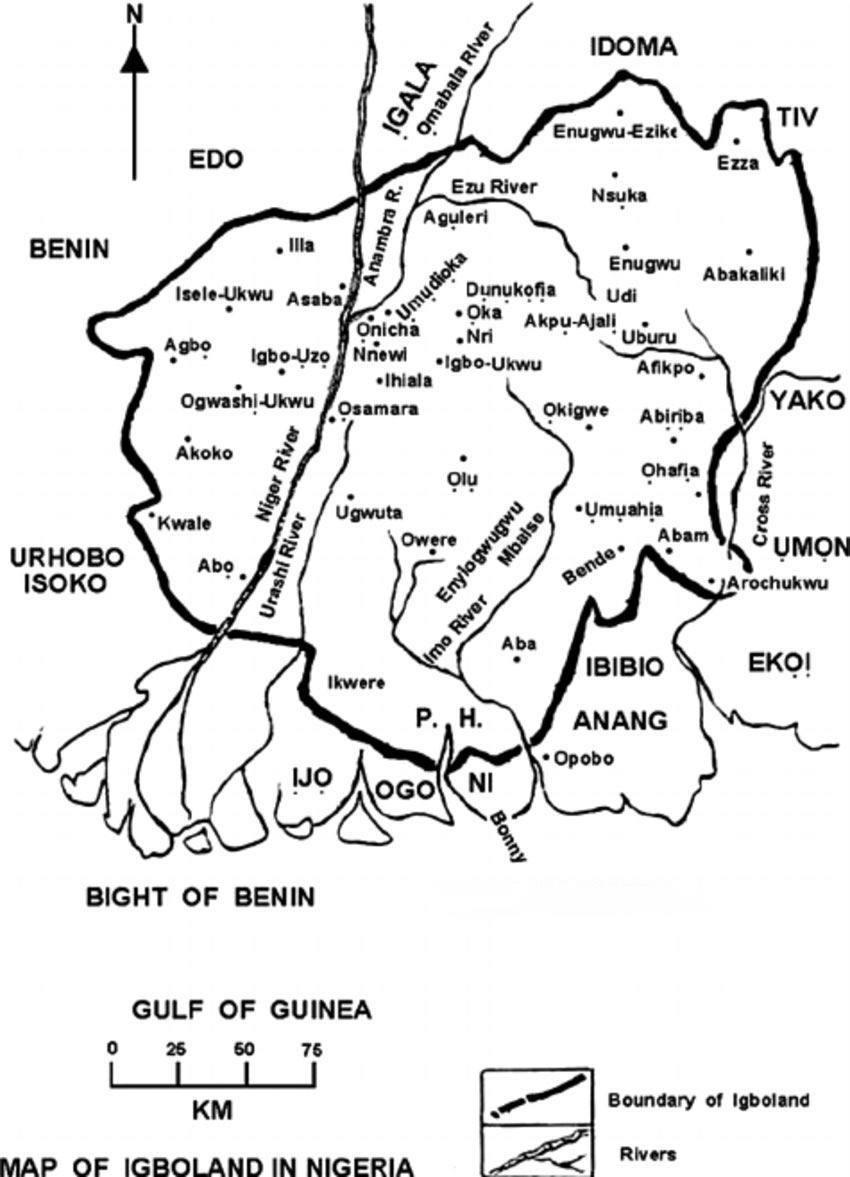
Anioma, meaning “Good Land” in our native tongue, is far more than a geographical expression. It represents a people united by history, identity, language, tradition, and aspiration. Today, Anioma refers to the area known as Delta North Senatorial District of Delta State, comprising nine Local Government Areas: Aniocha North (Issele-Uku), Aniocha South (Ogwashi-Uku), Oshimili North (Akwukwu-Igbo), Oshimili South (Asaba), Ika North-East (Owa-Oyibu), Ika South (Agbor), Ndokwa East (Aboh), Ndokwa West (Kwale), and Ukwuani (Obiaruku). These nine LGAs make up the proposed Anioma State, a region defined by peaceful coexistence, shared values, and untapped economic potential.
We trace our ancestry through layers of history, rooted in early Igbo migrations though may have been shaped by earlier interactions with the Benin Kingdom, the Igala territories, and ancient Igbo civilizations such as Nri and Arochukwu. These migratory and cultural encounters gave rise to our distinctive identity, reflected today in our three dominant dialect blocs: Enuani, Ika, and Ukwuani.
Based on earlier colonial classifications, Igbos are thus spread:
- Northern Igbo: included Onitsha Province (Onitsha, Awka, Awgu, Udi, Nsukka, part of Idah Divisions), Anambra, Enugu, Kogi States
- Southern Igbo: included Owerri Province (Owerri, Orlu, Okigwe, Aba Divisions), Rivers Province (Ahoada, part of Opobo, part of Brass Divisions), Imo, Abia, Rivers, Akwa Ibom, Bayelsa States
- Western Igbo: included Asaba Division, Benin Province (part of Edo and Benin Division – Igbanke, Aibionkula), Warri Province (Aboh Division), Delta North
- Cross River/Eastern Igbo: Ogoja Province (Abakaliki, Afikpo, part of Obubra Divisions, part of Idoma Division) Owerri Province (Bende), Ebonyi, Abia, Cross River, Benue States