
– by Chulex James Enomate
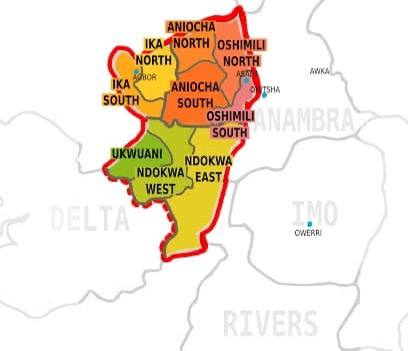
The call for Anioma State creation is a conversation that has travelled across generations – from community halls to constitutional conferences, from cultural gatherings to being tested on the floor of the National Assembly. What makes its current phase defining is that the conversation has transcended being just historical: it is active, structured, and firmly positioned within Nigeria’s legislative process. A win, if I must say. But what next?
Anioma’s story begins long before modern political boundaries. The communities that make up today’s Delta North share deep cultural and linguistic ties with the wider Igbo nation. Colonial administrative decisions, however, placed Anioma within the Western Region for convenience, separating it politically from the Eastern Region. That administrative choice shaped decades of identity and representation concerns that would later fuel the agitation for a distinct state.
Since Nigeria’s independence, and through successive state creation exercises – 1967, 1976, 1987, 1991, and 1996, Anioma leaders and advocacy groups have consistently pressed their case. When Bendel State was eventually split into Edo and Delta States in 1991, many believed it was another missed opportunity for Anioma’s distinct recognition within the federation.
The return to democratic governance in 1999 revived the movement with renewed organisation and coordination. Cultural bodies, socio-political groups, traditional rulers, and political leaders intensified advocacy through memoranda, public engagement, and constitutional reform discussions. Importantly, the demand has always been framed within Nigeria’s constitutional framework; not as a secessionist call, but as a peaceful and lawful quest for administrative equity.
Today, the agitation has moved beyond rhetoric. It has entered a more strategic phase of national engagement. Legislative advocacy at the National Assembly, broader public discourse, and coalition-building across ethnic and political lines have repositioned Anioma State creation as a serious constitutional matter rather than a regional slogan.
I believe that creating Anioma State would address long-standing minority concerns, improve administrative efficiency, and enhance representation within Nigeria’s federal structure. I maintain that equitable state distribution strengthens national unity. For many Anioma people, the demand is less about politics and more about recognition, that is, recognition of identity, contribution, and developmental potential.
Recent developments have given the movement clearer direction and visibility. It is noteworthy that legislative efforts have placed Anioma State creation within formal constitutional procedures, ensuring that the conversation is anchored in due process. This marks a significant shift from earlier decades when advocacy often lacked sustained national traction.
At the centre of this renewed momentum is Senator Ned Nwoko, whose role in advancing the proposal at the National Assembly has brought the issue back into mainstream legislative debate. His involvement has provided structure to what was, for years, largely an advocacy-driven campaign. In such defining moments like this, leadership is more about boldly translating aspiration into actionable steps. That is what the Distinguished Senator Prince Ned Munir Nwoko has done. Through situating Anioma State creation within constitutional mechanisms, the agitation has moved from emotional appeal to institutional process. That transition is critical. The road ahead remains procedural and rigorous. State creation in Nigeria requires broad consensus, constitutional compliance, and national approval. It is not achieved through sentiment alone. Yet, the fact that Anioma’s case is once again firmly on the national table signals a defining moment in its long history of advocacy.
The Anioma State movement is one of Nigeria’s most enduring state-creation efforts. It reflects a broader challenge within the federation; how to manage diversity, protect minority interests, and ensure fair representation without undermining unity. For us, Anioma State represents decades of aspiration crystallising into legislative possibility. Whether viewed through the lens of identity, development, or federal equity, the current phase of the agitation stands apart from earlier efforts. It is more coordinated, more visible, and more grounded in constitutional procedure.
For us as Anioma people, this chapter is a decisive moment where history, advocacy, and legislative action will be tested with justice and fairness.
God bless Anioma